
Investing in Energy Storage at Continental Scale
Storage has stopped being an accessory to generation and become infrastructure in its own right. The Exchange lists it accordingly, with its own custody and settlement treatment.
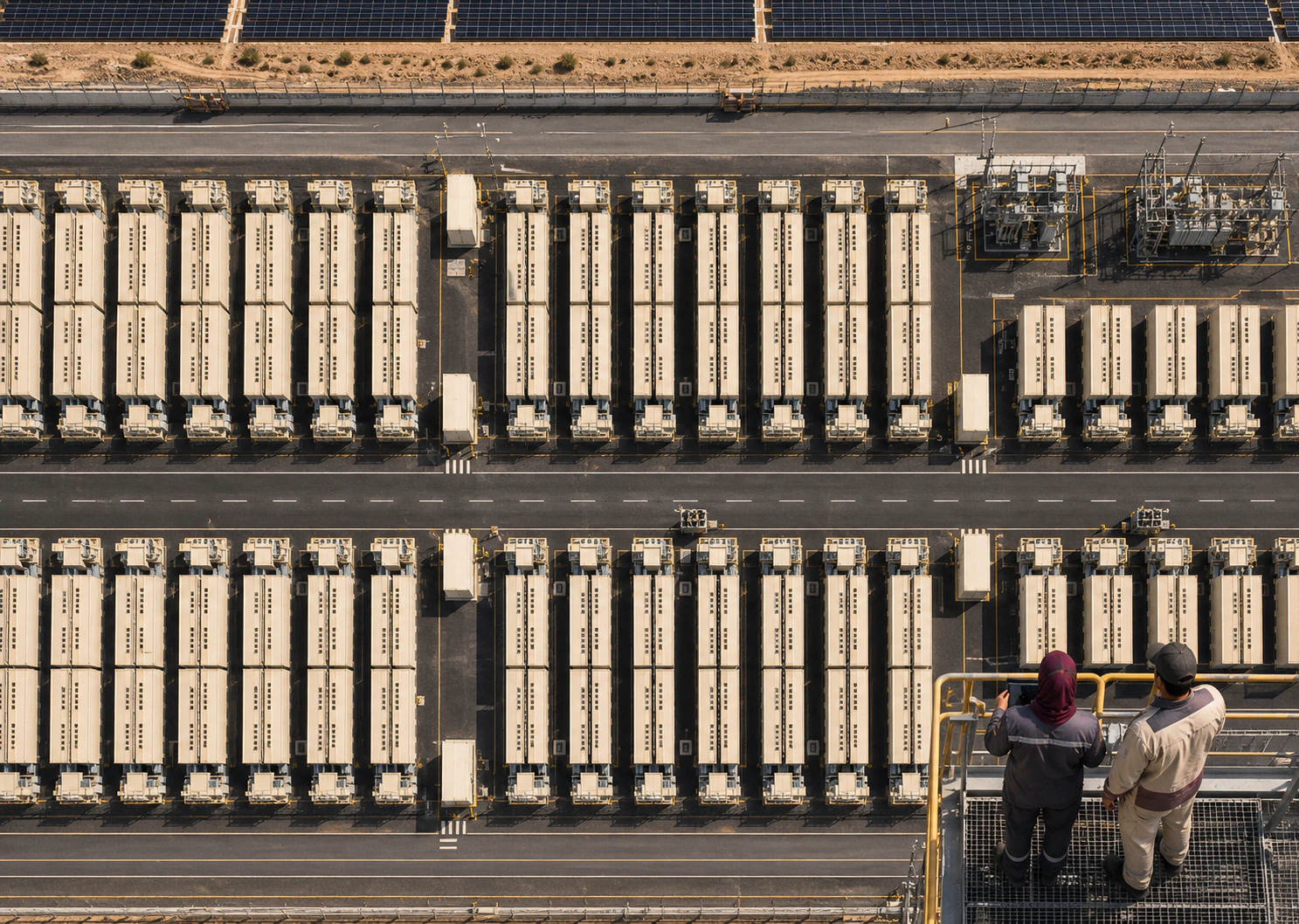
Storage as a listed asset class
A battery system earns revenue from several sources at once — arbitrage, capacity payments, ancillary services and firming contracts with adjacent generation. That complexity is precisely why storage has been slow to attract long-term capital in the corridors we serve.
The Exchange treats storage as its own class on the register, with a contract structure that separates each revenue line and settles it against verified performance. Members can take exposure to the asset without having to model every market it participates in.
What it does for the corridors
Storage is what allows a corridor to run on the generation it already has. It absorbs midday solar, releases it into the evening industrial peak, and holds enough reserve to keep a processing line stable through a fault.
For members developing industrial capacity, this changes the arithmetic of siting. A processing facility that would previously have required either grid reinforcement or permanent diesel backup can instead be paired with contracted storage, procured on the Exchange under the same settlement terms as its generation supply.
Underwriting degradation and delivery
The distinctive risk in storage is that the asset changes with use. Capacity degrades along a curve that depends on how the system has been cycled, and a buyer who cannot see that history cannot price the asset.
Cycling history, state of health and warranty position are therefore part of the custody record from admission, updated through the life of the asset. Availability is reconciled against contract before settlement clears, and sustained underperformance is recorded against the operator. Members acquiring a storage position are buying a measured asset rather than a nameplate figure.
Where storage goes next
Two developments are changing what members ask for. Digital infrastructure is arriving in corridor markets with load profiles that demand sub-second response, and electrification of haulage and cold chain is adding predictable evening peaks that storage is well suited to serve.
Both push storage from a generation accessory toward a contracted service in its own right. Members are increasingly buying availability windows and response guarantees rather than megawatt-hours, and pricing those requires performance data the Exchange already holds.
The register is being extended accordingly, with contract terms that separate energy, capacity and response, each settled against verified delivery. The opportunity is substantial, but it depends on the same thing every other class on the register depends on: a measured asset with a maintained record.
More Corridor Highlights
-
Sustainable aviation fuelFuel Platforms: Leaders in Sustainable Aviation Fuel
-
RenewablesRenewable Platforms Across the Global South
-
RenewablesGeneration Platforms: Energy Leaders Across the Global South