
Home Utility Services: Maintaining Connections Across Member Markets
Connections fail, and someone has to answer. The Exchange lists the residential service operators that keep the last mile working for members and their households.
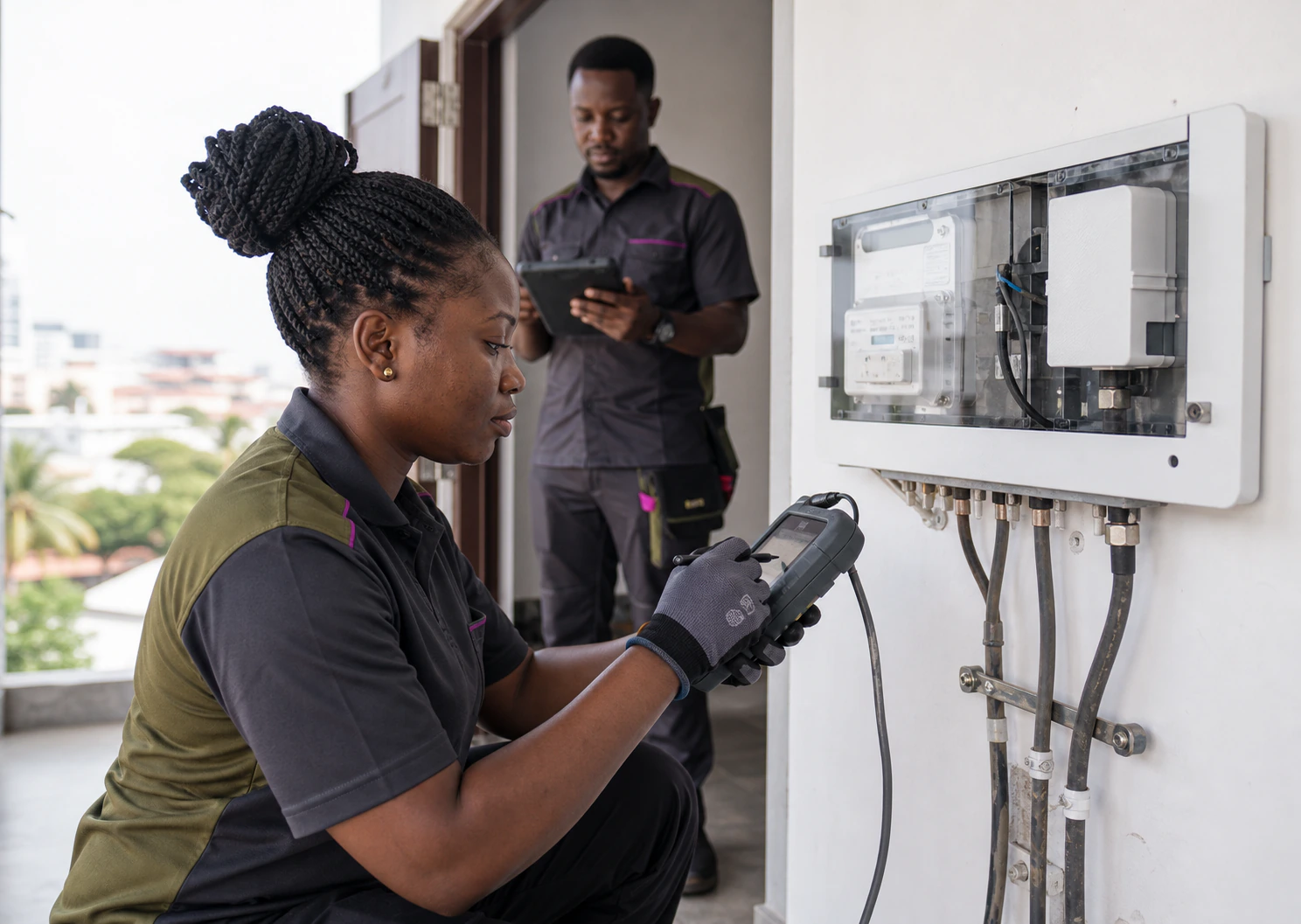
The service layer behind the connection
A corridor that electrifies households and small workshops creates an obligation it rarely plans for: emergency repair, routine maintenance and the cover that lets an ordinary household absorb a failure without losing its connection.
Operators admitted under this platform provide exactly that. They deliver emergency repairs, maintenance support and protection products to homeowners and tenants, servicing well over a million homes through networks of qualified engineers and technicians.
Why it belongs on the register
Residential service is a compliance-dense business. It handles regulated products, works inside people's homes, and depends on a workforce whose qualifications must be verifiable at the point of work.
That is a custody problem, and the Exchange treats it as one. Engineer accreditation, product authorisation, complaint history and service performance are held on the register and maintained continuously. Members contracting with these operators — utilities, housing providers, corridor developers — can confirm standing before they place work rather than after a failure.
Value to members on both sides
For the operators, listing turns a dispersed local reputation into a portable credential. A service business with a verified record can bid for work in adjacent markets without rebuilding trust from scratch.
For the utility and housing members that rely on them, it converts an operational dependency into a contractable one. Response times, completion rates and compliance standing are reported against the contract and reconciled at settlement, so the last mile is held to the same evidentiary standard as the generation that feeds it.
Coverage as a corridor obligation
Electrification programmes are judged on connections made. They are experienced by households on whether the connection still works two winters later, and that gap is where public support for corridor infrastructure is usually lost.
Listing residential service operators lets the Exchange close it. Coverage, response time and completion rates are reported by market, so a corridor developer or utility member can see whether the service layer has actually reached the households its connection programme claims to serve.
It also gives smaller local operators a route onto the register. A regional business with a verified record of qualified engineers and completed work can contract with utility members directly, rather than sitting invisible beneath a subcontracting chain that no counterparty can inspect.
More Corridor Highlights
-
RenewablesGeneration Platforms: Energy Leaders Across the Global South
-
DataData Platforms: Digital Rails for African Market Data
-
TransportProviding Critical Logistics Across African Corridors