
Light Industrial Network: Growing Custody in Mission-Critical Corridors
Infill light industrial space is where a corridor's last mile is actually performed. The Exchange holds it in custody as a single national network rather than as scattered buildings.
A network assembled at scale
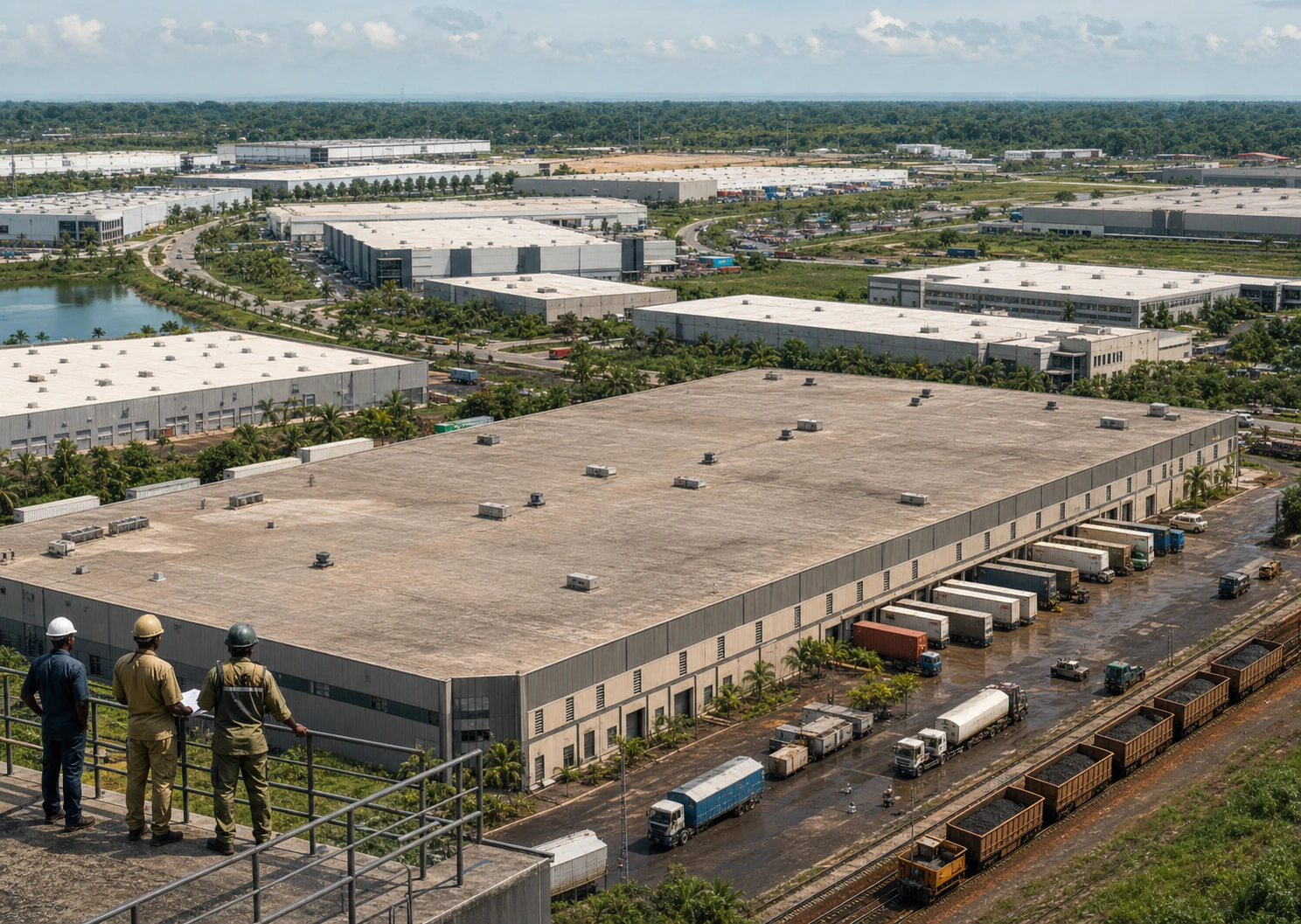
In 2024 the Exchange took into custody a 14.6 million square foot portfolio of infill light industrial assets across twenty rapidly growing markets. These are not distribution megaboxes; they are the mid-sized, close-in facilities where consolidation, final assembly and last-mile despatch are done.
Their defining characteristic is location. Sited near major population centres, they perform a mission-critical function for the operators inside them, which is why occupancy in this segment has proven durable through cycles that emptied more speculative space.
Custody, not just ownership
Assets of this kind have historically traded as individual buildings, each with its own lease file, compliance position and maintenance record, reconstructed by each successive buyer.
Integrating them into a single network changes that. Title, lease terms, environmental standing, safety certification and capital plans are held as one custody record maintained by the Exchange, so the portfolio can be assessed, financed and settled as a network rather than as twenty separate diligence exercises.
Upgrading what members actually use
Integration is followed by targeted work: sustainability improvements that reduce operating cost for tenants, safety upgrades that hold every site to one standard, and operational changes that make service consistent across markets.
For corridor members the benefit is practical. An operator expanding across several markets can take space on consistent terms with a known compliance position, and the Exchange can reconcile occupancy and obligations across the whole network. That consistency is what turns a collection of buildings into logistics infrastructure that supports durable value.
Why infill rather than distribution
The distinction is easy to miss and decides the whole thesis. Large distribution warehouses are built where land is cheap and can be replicated by anyone with capital. Infill light industrial sits inside built-up areas where new supply is effectively unavailable.
That scarcity is what has kept occupancy durable through cycles. A tenant performing final-mile despatch cannot relocate twenty miles out without losing the reason it took the space.
For members, the practical consequence is that value rests on location and lease structure rather than on rental growth assumptions. Both are held in the custody record and reported against the network, which makes the thesis testable rather than narrative.
More Corridor Highlights
-
MultifamilyUrban Housing: Contrarian Custody Case Study
-
Science & InnovationInnovation Campuses for Market Research
-
Mixed-useFlagship Custody Hubs: The Gold Standard for Trade-Led Workplaces