
Providing Critical Logistics Across African Corridors
Corridors are defined by what can move along them. The Exchange lists the container, rail and terminal operators that make physical settlement possible.
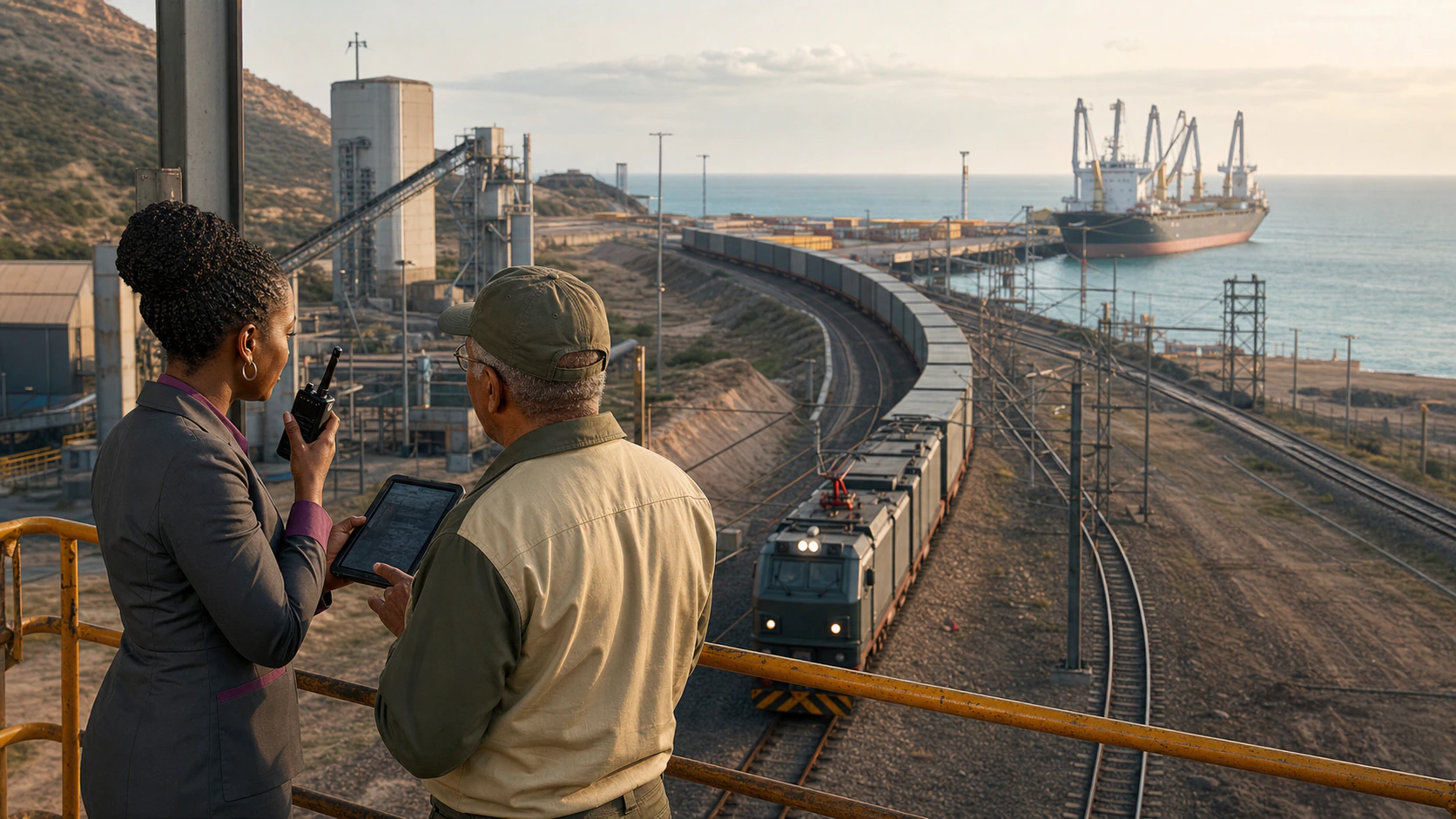
The physical layer of settlement
A trade settles on the Exchange when title, payment and delivery are all confirmed. Delivery is the part that depends on operators no financial market has traditionally taken responsibility for: the container fleet, the rail line, the transshipment yard and the port terminal.
Listing those operators brings them inside the settlement perimeter. Their capacity, service record and compliance standing are held in custody alongside the commodity positions that depend on them, so a member can see whether a corridor can actually carry the volume it has contracted for.
Containers, rail and terminals
The platform spans the full chain. Intermodal container fleets provide the interchangeable units that make cross-border movement possible at all, with fleets on the register measured in millions of container-equivalent units.
Integrated inland operators carry the other half: thousands of kilometres of rail, transshipment terminals where road meets rail, and port terminals where rail meets sea. Together they move agricultural output, processed minerals and steel — the physical goods that give a corridor its economic reason to exist.
Verified movement, not asserted movement
The reason to list logistics rather than merely reference it is provenance. A mineral consignment's compliance claim is only as good as the record of where it has physically been, and that record is produced by carriers and terminals.
Members on the register lodge movement evidence as part of ordinary operation. Custody transfers at each handover, and the Exchange reconciles the chain before a linked commodity settlement clears. Buyers get delivery they can prove; operators get contracted volume from members who could not previously verify their service.
Corridor capacity as a planning input
A corridor's throughput ceiling is set by its narrowest link, and that link is rarely the one participants expect. It is more often a transshipment terminal's handling rate or a shortage of the right container class than the rail line itself.
Listing operators across the whole chain lets the Exchange publish where the constraint actually sits. Members planning production can see the ceiling before they commit to volume, and operators can see where investment would relieve it.
That transparency has a second effect. Where a constraint is visible and priced, capital tends to arrive to remove it — which is how a corridor's capacity grows in step with the trade it carries rather than several years behind it.
More Corridor Highlights
-
MidstreamEnergy Midstream: Corridor Infrastructure for African Markets
-
UtilitiesUtility Access: Connecting Communities to Reliable Energy
-
UtilitiesPower Utilities: Serving High-Growth African Regions