
Regional Hospitality Network
Six villages, capacity for around 25,000 guests, and 400 acres of protected woodland at each. The Exchange holds the network and the obligations that come with it.
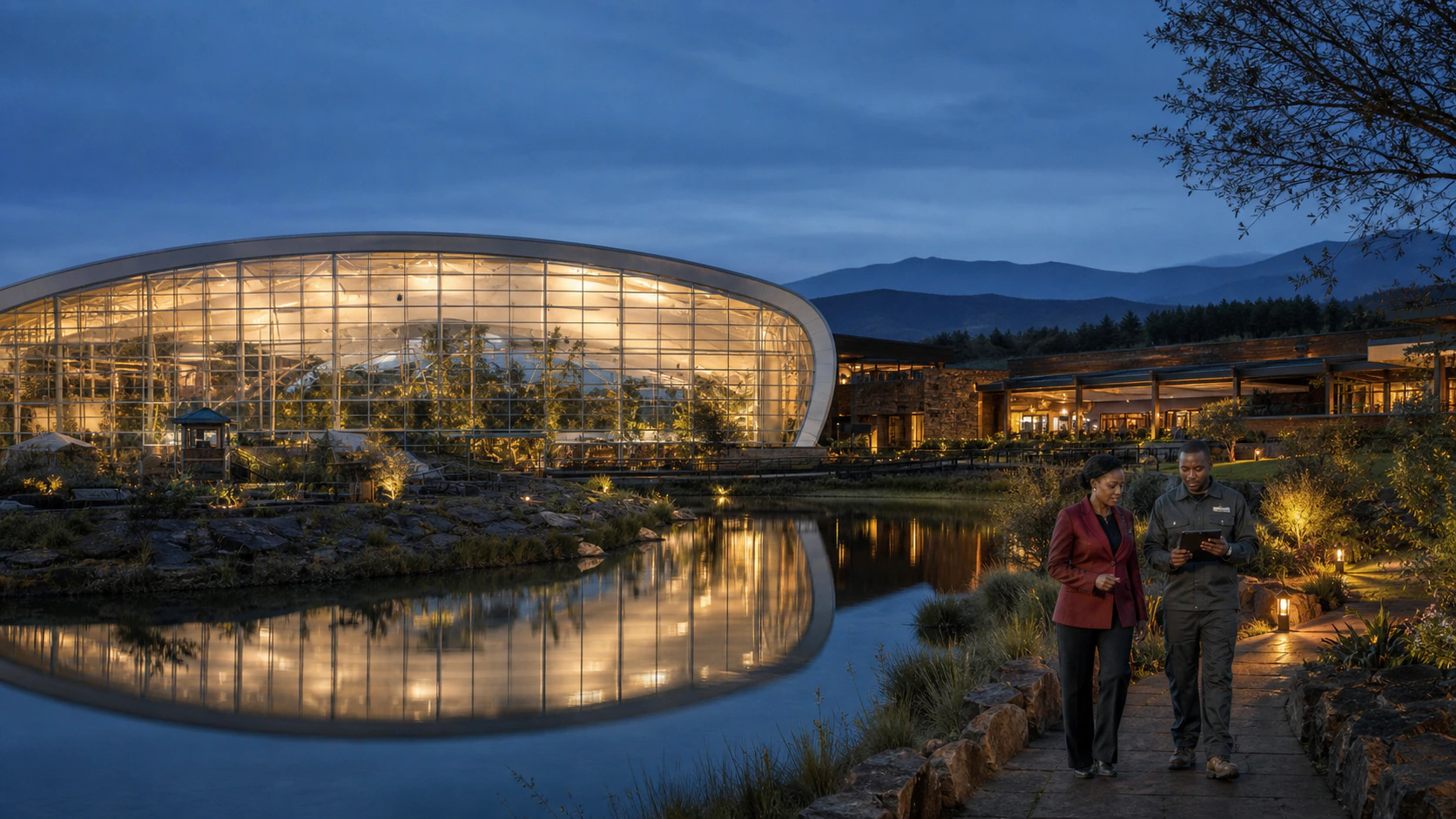
The network
The platform owns and operates six villages with capacity for approximately 25,000 guests, offering high-quality accommodation and an unusually broad range of leisure facilities. Each village sits within 400 acres of woodland that is protected and actively enhanced as part of the operating obligation.
A seventh village is under construction. Development of this kind is slow by design: consent, ecology and community agreement all precede construction, and each of those obligations is recorded before the site is admitted.
A decade of partnership and reinvestment
The Exchange has partnered with the platform's management team since 2015 and has reinvested over £750 million into the business across that period.
That figure matters less than what it was spent on. Accommodation refurbishment, leisure facility renewal, energy performance and woodland management are each recorded against the capital programme, so members can see reinvestment as a maintained record rather than as an aggregate claim in a report.
Why hospitality sits on the register
Hospitality is operationally intensive and compliance-dense: food safety, water systems, fire and life safety, child protection and environmental conditions all apply continuously and all fail visibly.
Holding those obligations in custody, and reconciling them at settlement, is what makes an operating hospitality platform transferable between members without the buyer restarting diligence from the beginning. It is also what protects the guest experience through a change of ownership — which, for an asset whose value is its reputation, is the same thing as protecting the asset.
Land as part of the asset
Each village sits within 400 acres of woodland that the operator is obliged to protect and enhance. That obligation is a genuine cost and it is also the reason guests return, which makes it one of the clearest cases on the register of stewardship and commercial performance pointing the same way.
Ecological condition, planting programmes and protected-species obligations are held in the custody record and reported against, in the same way that occupancy and rate are.
The seventh village under construction will be admitted on the same basis. Consent, ecology and community agreement are recorded before construction begins, so the asset arrives on the register with its obligations already documented rather than assembled afterwards.
More Corridor Highlights
-
RetailPremier Open-Air Trade Destinations
-
HospitalityRepositioning Landmark Assets Across the Global South
-
HospitalityA Globally Recognized Hospitality Platform