
Nuclear Platforms: Accelerating Commercial Power for African Markets
Nuclear capacity is the longest-dated commitment a member can make. The Exchange lists it under a custody and compliance regime built for assets measured in decades rather than quarters.
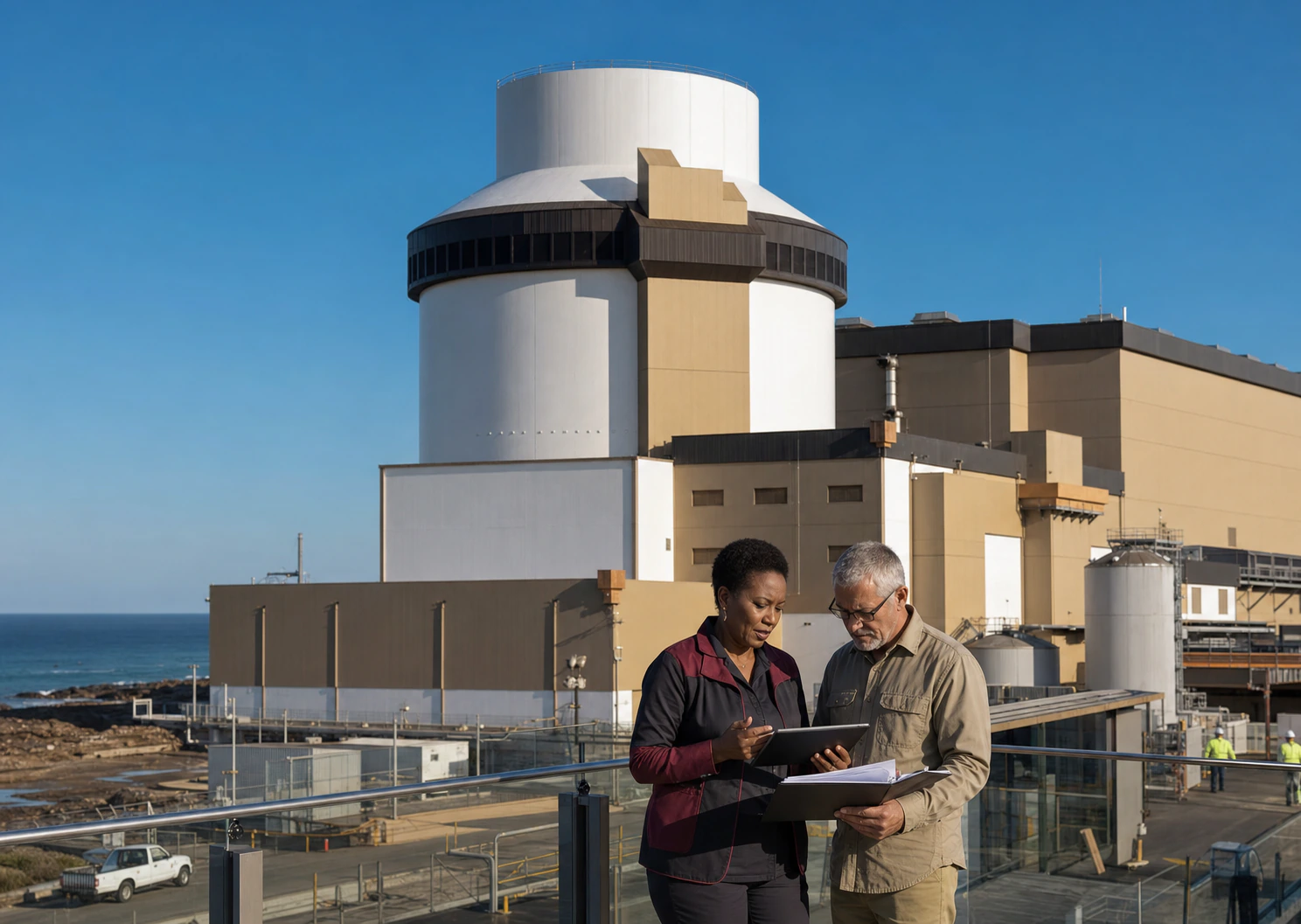
Baseload that corridors can plan against
Industrial corridors cannot be built on intermittent supply alone. Processing, refining, cold chain and data infrastructure all require power that is available irrespective of weather or season, and members developing those corridors have consistently asked the Exchange for a route into firm, zero-carbon baseload.
Our nuclear platform answers that request. It admits operators holding licensed generating capacity, life-extension programmes and new-build development rights, and lists their output under long-dated contracts that a corridor developer can plan a decade of demand around.
A compliance regime proportionate to the asset
Nothing the Exchange handles carries a heavier regulatory load. Admission requires the operator's licensing position, safety case, fuel supply arrangements and decommissioning provision to be lodged in full and kept current, with any regulatory change reflected in the record before further settlement occurs.
This is deliberately more demanding than the standard listing test. It is also what makes the asset tradeable: a counterparty acquiring an interest in licensed capacity needs the licence itself to be beyond dispute, and the Exchange's role is to hold that assurance on behalf of every member on the register.
Bringing new capacity to African markets
The near-term work is less about new construction than about making existing and planned capacity legible to capital that has never underwritten it. Members in several corridors are assessing small modular designs sized to a single industrial cluster, where the financing question is not technical feasibility but whether a lender can see a credible operating and compliance record.
The Exchange supplies that record. It maintains the operator's full history, tracks each regulatory milestone, and settles contracts against verified delivery, so that first-of-a-kind capacity in a new market can be financed on the same evidentiary terms as established capacity elsewhere.
What comes next on the register
The immediate work is admission capacity. Each nuclear operator takes considerably longer to admit than any other class on the register, because the licensing and safety documentation is voluminous and must be verified rather than accepted.
Beyond that, the Exchange is building the contract templates that let corridor members procure long-dated baseload without negotiating each agreement from first principles — standard delivery, availability and compliance terms that a lender in any member market can read.
The intent is not to make nuclear routine. It is to make the assurance around it routine, so that the scarce expertise in the market can be spent on engineering and regulation rather than on reconstructing the same evidence for every new counterparty.
More Corridor Highlights
-
HydroHydro Platforms: Serving African Corridors With Baseload Power
-
WindRegional Power Platforms
-
RenewablesMeeting Growing Power Demand Across African Markets